
Teaching Philosophy
We start with a couple of simple questions: What do you listen to? What inspired you to pick up the guitar? Who do you wish you could play like? From there, we start learning the songs you want to play.
Why?
People tend to learn more effectively when it’s something they’re genuinely interested in.
This song-oriented approach makes finger exercises and learning scales and chords — all of that stuff that might otherwise feel monotonous — more enjoyable. And because we apply them directly to the song we’re working on that week, they tend to stick.
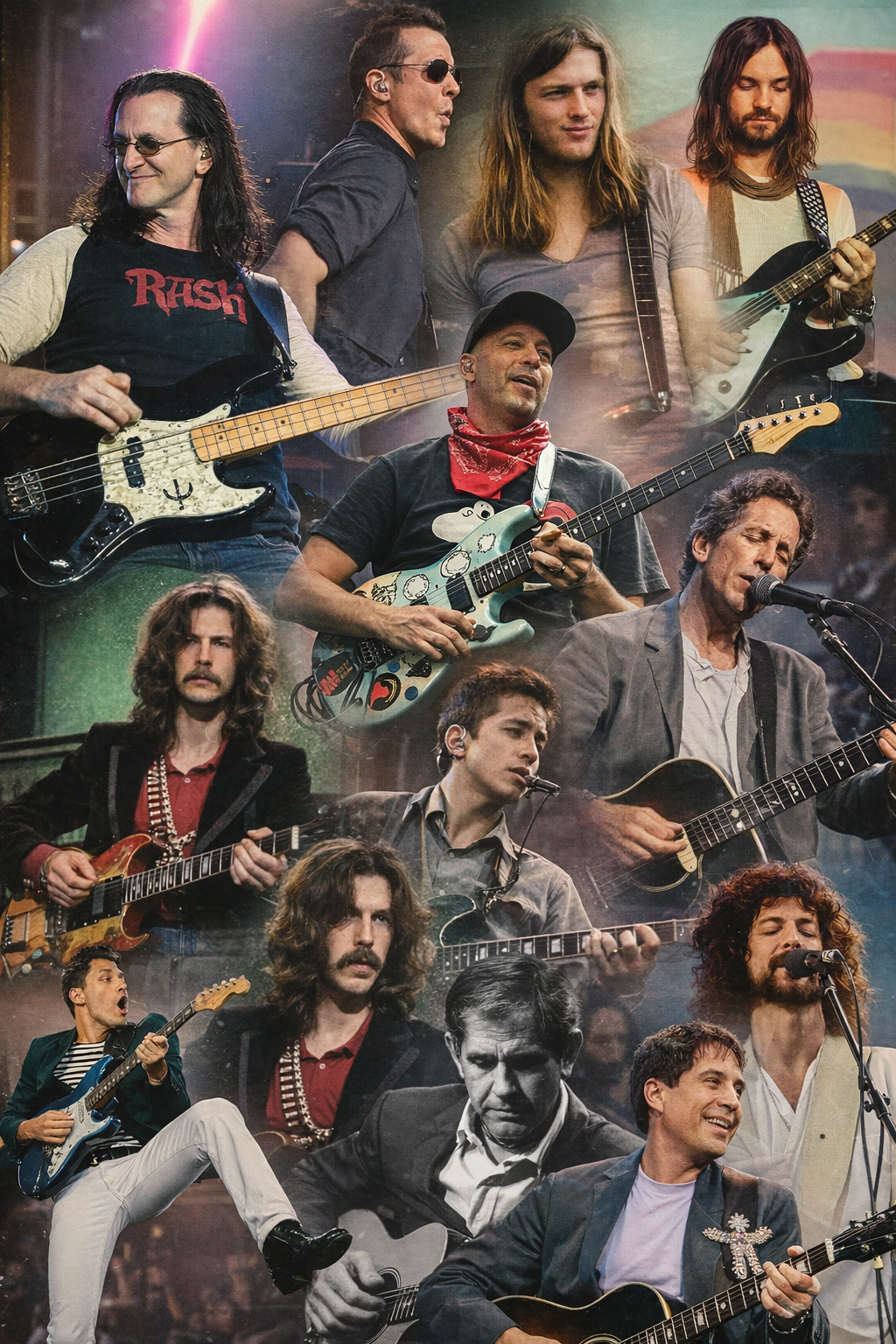
Some want to play searing electric guitar solos like David Gilmour of Pink Floyd or groovy rock riffs like Tom Morello from Rage Against the Machine. Others want to play psychedelic progressions like early Tame Impala, funky chords like Cory Wong, or bass lines like Robert DeLeo of Stone Temple Pilots or Geddy Lee of Rush.
Whatever your interest, the lessons start with the music that inspired you to pick up the instrument in the first place.
As students grow more comfortable, they also have opportunities to play with other musicians during small Band Night sessions in the studio — one of the best ways to build confidence and experience making real music together.
Because at the end of the day, music isn’t just something you practice alone.
It’s something you create with other people.
What Makes My Lessons Different?
Song-First Approach
If theory were the starting point, most people wouldn’t pick up an instrument. It matters, but the real driver is wanting to play that song you heard last week.
I take a song-first approach. Theory and scales aren’t taught in isolation. They’re introduced as tools to help you understand and play the music you actually care about.
For example, “If you learn this scale, the bridge in that song will make more sense. This exercise helps you get there.”
Everything connects back to the song.
That’s where motivation stays high, progress feels real, and concepts actually stick.
Music is Active Listening
Many beginners lean on tabs and like any technology, they are great in a pinch, but shouldn’t be a crutch.
Why?
Because tabs are visual. Music isn’t.
Tabs train your fingers to follow numbers, not your ears to understand sound. Do you hear how what you’re playing fits the chord or why it works?
Let’s focus on developing your ear first.
When you can hear what’s happening, you can follow, adapt, and create in real time.
Performance Focus
Playing with others is where timing, feel, and awareness really develop. It forces you to listen, adjust, and stay locked in with what’s happening around you.
Notes matter, but how you play them in the moment matters more. We keep this in mind from the beginning.
As you progress, there are opportunities to build confidence, sharpen your instincts, and turn practice into real music in a live band setting during monthly “Band Night.”
Whether you want to play to a crowd of screaming fans or just friends and family there’s nothing like playing to a live audience and I’ll help you get there.
Interested in Lessons?
Fill out the form below for a free initial lesson / consultation!